
Stucco and Exterior Cladding Defects in Colorado
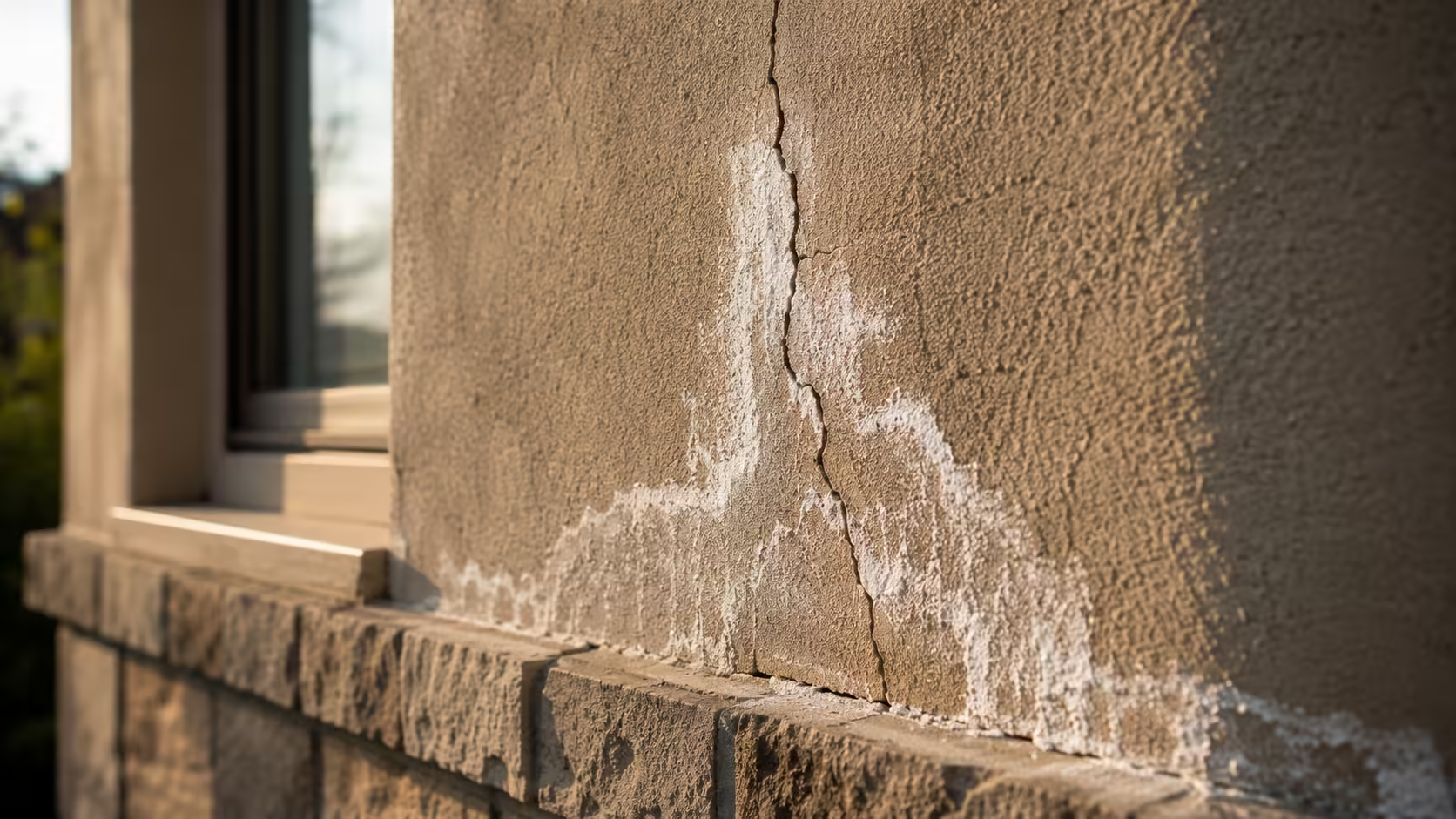
A crack that keeps widening along the same line every year. A patch of stucco that looks water stained no matter how many times it gets painted over. A soft, almost spongy spot near the bottom of an exterior wall. On their own, these can look like the kind of cosmetic wear any Colorado home develops over time. Together, or if they keep coming back after a repair, they are often the first visible signs of a stucco defect attorney Colorado homeowners eventually need to get involved, because what shows on the surface is frequently a small preview of what has been happening behind the wall for years.
At Elkus & Sisson, P.C., our Colorado construction defect attorneys help homeowners get past the guesswork on cracking, staining, and moisture problems in stucco and other exterior cladding systems. We work with independent building envelope experts to identify the actual cause, determine which contractor or manufacturer is responsible, and pursue the available remedies under Colorado law.
What Are Signs of a Stucco Construction Defect?
Stucco and EIFS (exterior insulation and finish systems) problems rarely announce themselves all at once. More often, homeowners notice one or more of the following, sometimes for months before connecting them to a single underlying cause:
- Cracking beyond typical hairline settling cracks, especially cracks that keep widening or reappear after a patch repair
- Surface water stains or efflorescence, the white, chalky salt deposits that form as moisture works its way through the material
- Bubbling, bulging, or delamination, where the stucco or synthetic finish separates from the wall behind it
- Soft or spongy spots, particularly near the bottom of walls, below windows, or around penetrations like vents and light fixtures
- Musty odors near an exterior wall, or visible mold when trim or siding is opened up for an unrelated repair
- Interior leaks, water stains, or damaged drywall on walls that back up to exterior stucco or cladding
Symptoms clustered around windows, doors, rooflines, or other penetrations are especially worth paying attention to, since those transition points are where most stucco and EIFS failures actually originate.
What Causes Stucco and EIFS Failures?
Stucco and EIFS are both designed to shed water, not to be fully waterproof on their own. The material is porous by design, which means the weather resistive components installed behind it, the building wrap, flashing, and weep screeds, are what actually keep water from reaching the framing. When any of those components are missing, installed out of sequence, or installed incorrectly, water gets trapped behind the cladding instead of draining out.
The most common causes include missing or improperly installed flashing and weep screeds, incomplete or poorly integrated building wrap, stucco applied too thickly or without the expansion and control joints the system requires, and improper sealing around windows, doors, vents, and other penetrations. Material transition problems, where stucco meets a dissimilar material like brick, siding, or a window frame without the correct sealant or detailing, are another frequent culprit behind the exterior cladding water damage lawsuit claims Colorado homeowners bring. Synthetic EIFS systems carry an added risk, since their foam insulation layer can trap water behind an intact-looking acrylic finish for years before any exterior damage becomes visible.
Is Stucco Damage a Construction Defect?
Often, yes. A construction defect is a flaw in the design, materials, or workmanship of an improvement to real property that causes damage or makes it unsuitable for its intended use. In Colorado, these claims fall under the Construction Defect Action Reform Act (CDARA), C.R.S. § 13-20-801 et seq., and moisture intrusion behind stucco or EIFS cladding is one of the more frequently litigated defect categories under that framework.[1]
Colorado law limits ordinary negligence claims based solely on a building code or industry standard violation, but under C.R.S. § 13-20-804, that limitation does not apply once the failure causes actual damage to real or personal property.[3] Cracked stucco by itself might be treated as cosmetic, but staining, rot, mold, and framing damage are the kind of actual property damage that keeps a negligence claim available alongside any contract or warranty claim.
Who Is Responsible for Stucco Defects in Colorado?
Responsibility depends on where the failure actually occurred, which usually is not obvious from looking at the cracked or stained surface. A missing weep screed or a flashing installation error typically points to the stucco or EIFS installation subcontractor. A defective synthetic stucco system, incompatible fasteners, or a manufacturing flaw can point to the product manufacturer instead. A wall assembly that was never designed to shed water correctly around windows, doors, or roof intersections points to the architect or design professional. General contractors can also bear responsibility for failing to supervise or coordinate the trades responsible for the exterior wall system.
Stucco and EIFS failures are common in condominium and townhome exteriors, where a single design or installation flaw can affect the shared building envelope across many units rather than one home. When that is the case, the HOA, not an individual unit owner, typically has standing to pursue the claim for the shared exterior components. Our HOA and Condo Board Construction Defect Claims in Colorado guide covers how that process works for board decision-makers.
How Do I File a Claim for Stucco Defects?
Before filing suit, Colorado law requires a written Notice of Claim under C.R.S. § 13-20-803.5, describing the alleged defect and giving the builder, installer, or developer an opportunity to inspect the property and offer repairs or a settlement.[2] This pre-suit process applies to stucco and EIFS claims the same way it applies to any other construction defect claim in Colorado. Our Colorado CDARA guide walks through the full Notice of Claim, inspection, and repair offer sequence in detail.
Whether a claim is worth pursuing depends heavily on the scope of the hidden damage and how clearly it can be tied to a specific installer, manufacturer, or design professional. A hairline crack that a contractor promptly and permanently repaired is a very different situation than staining or cracking that keeps returning, or that an expert traces to a missing weather barrier behind a large section of wall.
Documenting Stucco and Cladding Damage
Good documentation, started as early as possible, is often what separates a provable claim from a dispute over what was actually there. Useful records include:
- Photographs of cracking, staining, efflorescence, or bubbling, taken each time the condition changes, with the date noted
- A written log of when the problem was first noticed and every time it worsens or reappears after a repair
- Records of any prior patch repairs, including who performed them and what they were told caused the issue
- An independent expert’s inspection report, including moisture readings behind the cladding where possible
- Copies of any correspondence with the builder, installer, or manufacturer about the problem
Do not authorize a full re-stucco or cladding replacement before an independent expert has documented the condition behind the wall and, where CDARA applies, before the responsible construction professional has had its inspection opportunity. Replacing the cladding too early can destroy the evidence needed to prove what actually caused the failure.
Filing Deadlines for Stucco and Cladding Defect Claims
Colorado generally allows two years from the date a defect is discovered, or should have been discovered, to file a claim, and a six-year statute of repose measured from substantial completion of the construction, under C.R.S. § 13-80-104.[4] Stucco and EIFS problems are especially prone to delayed discovery, since the damage develops behind an intact-looking surface and often is not visible until cracking becomes severe or a repair opens the wall up.
That delayed-discovery pattern makes it easy to underestimate how long a visible crack or stain has actually been on the property. Treating the first recurring symptom, rather than a full failure, as the trigger to start documenting and investigating is the more reliable way to stay inside the deadline.
Deciding When Stucco Damage Is More Than a Cosmetic Repair
Recognizing the warning signs is the first step. Understanding what actually causes them, who is likely responsible, and how the clock is already running is what protects a claim later.
- Cracking alone rarely tells the whole story. Hairline cracks from normal settling are common and usually harmless. Cracks paired with staining, efflorescence, or a soft spot nearby are what typically signal that water has already gotten behind the stucco, not just marked its surface.
- The cause determines which party actually bears responsibility. A missing weep screed or flashing error usually points to the installer. A defective EIFS system or incompatible material points to the manufacturer. A wall assembly that was never designed to shed water correctly points to the architect.
- A stucco construction defect lawyer Denver homeowners consult early can direct the inspection before repairs erase the evidence. An expert who documents moisture readings and the condition behind the stucco before any patching happens is often what turns a suspected defect into a provable one.
- Colorado’s discovery based deadlines do not wait for certainty. The statute of limitations can start running once a reasonable homeowner would have investigated a visible crack or stain, whether or not the full extent of the hidden damage behind the wall was known or confirmed at that time.
Stucco and EIFS failures rarely stay a cosmetic problem for long. Treating a crack or stain as a possible construction defect early, rather than after a full re-stucco is needed, is what keeps your options open.
Frequently Asked Questions: Stucco and Exterior Cladding Defects
Is stucco damage a construction defect?
It can be, if the damage traces back to a flaw in the design, materials, or installation of the stucco or EIFS system rather than normal wear and aging. Moisture intrusion behind stucco is one of the most common categories of construction defect claims in Colorado, and it is evaluated under the same Construction Defect Action Reform Act framework as any other defect once it causes actual damage to the property.
Who is responsible for stucco defects in Colorado?
Responsibility depends on where the failure actually occurred. A missing or improperly installed weep screed, flashing, or building wrap usually points to the stucco or EIFS installer. A defective synthetic stucco system or incompatible material can point to the manufacturer. A wall assembly that was never designed to shed water correctly around windows, doors, or rooflines can point to the architect or design professional, and general contractors can bear responsibility for failing to supervise the work.
How do I file a claim for stucco defects?
Before filing suit, Colorado law requires a written Notice of Claim describing the alleged defect and giving the builder, installer, or developer an opportunity to inspect the property and offer repairs or a settlement. Documenting the damage and getting an independent expert inspection before any permanent repairs are made is an important early step, since repairing the wall too soon can destroy the evidence needed to prove what caused the failure.
What are signs of a stucco construction defect?
Common warning signs include cracking beyond typical hairline settling cracks, surface staining or efflorescence, bubbling or delamination of the stucco surface, soft spots, musty odors near exterior walls, and interior leaks or moisture damage discovered during an unrelated repair. Symptoms clustered around windows, doors, or roof lines, or that return after a patch repair, are a stronger signal of an underlying installation or design problem.
Talk to a Colorado Construction Defect Attorney
Cracking, staining, or bubbling stucco is rarely just a paint problem, and waiting to investigate it only lets the hidden damage grow. Elkus & Sisson, P.C. represents homeowners and HOAs at our Colorado office locations in construction defect matters including stucco and EIFS failures, exterior cladding water damage, and related building envelope claims.
If you are seeing cracking, staining, or other signs of stucco failure on your Colorado home, contact us or call +1 303-567-7981 to schedule a free consultation.
[1] Colorado Construction Defect Action Reform Act, C.R.S. § 13-20-801 et seq., Colorado General Assembly |
https://leg.colorado.gov/sites/default/files/documents/2023A/bills/2023a_1255_enr.pdf
[2] CDARA Notice of Claim Requirements, C.R.S. § 13-20-803.5, Colorado General Assembly |
https://leg.colorado.gov/sites/default/files/images/olls/crs2023-title-13.pdf
[3] Restriction on construction defect negligence claims, C.R.S. § 13-20-804 |
https://law.justia.com/codes/colorado/title-13/regulation-of-actions-and-proceedings/article-20/part-8/section-13-20-804/
[4] Colorado statute of limitations and repose for construction defect claims, C.R.S. § 13-80-104 |
https://law.justia.com/codes/colorado/title-13/limitation-of-actions/article-80/section-13-80-104/